Count, not cipher
Numbers 33
42
A traditional textual count of stages. Hebrew Bible as itinerary. Rashi as later Jewish reading. Not English ordinal. Not Greek isopsephy.
Numbers 33 · the child, then the count
They left Egypt. They camped. They set out again. Numbers 33 writes the names of those places as if forgetting them would be a second exile. An itinerary is a kind of love: someone wanted the traveler to be able to look back and see how they were carried.
Rashi, reading 33:1 in its Jewish interpretive context, names forty-two stages. He tells of a king whose son falls ill on a journey. When they come home, the king recites the stops: here we slept, here you were cold, here you recovered. The list is not a trophy. It is memory as care.
CIPHER did not walk the wilderness. The 42 here is how many stages that tradition counts in the list. It is not a letter-sum of the place-names, and it is not an archaeological survey.
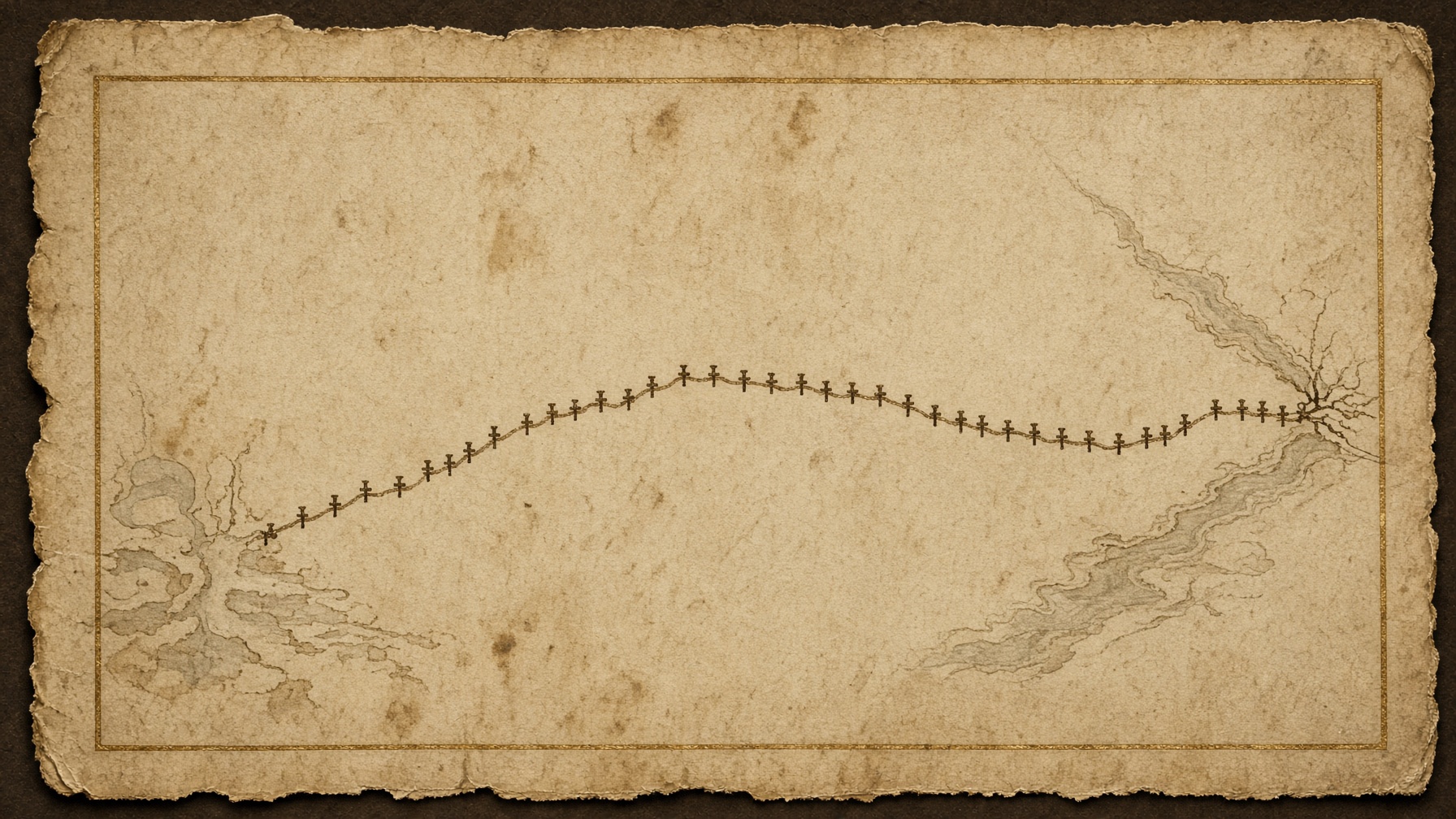
Memory as geography
The itinerary is the object
A list is a kind of care. It says: these places happened. Even the ones that hurt. Even the ones that were only a night. Memory as itinerary, not as trophy.
Archaeology does not confirm forty-two discrete camps as a field survey. We checked. The textual count is 42. The archaeological claim is not. A miss is the method working.
Count, not cipher
42
A traditional textual count of stages. Hebrew Bible as itinerary. Rashi as later Jewish reading. Not English ordinal. Not Greek isopsephy.
Letter sum, modern
42 | 24
English spelling of a Homeric destination under two modern machines. A wink after nostos. Not Torah.
Count, not cipher.
Notes